
Baby Sleep – A Wealth of Knowledge
How your baby sleeps safely, what is normal, and why you can worry less than you think.
Baby sleep is one of the topics with the most opinions. Here you'll find what really matters: reliable knowledge, calmly explained.
Key Points
- Newborns sleep 14 to 18 hours a day, but not all at once. Frequent waking is normal and healthy.
- Multiple night feedings are important, whether breastfeeding or bottle-feeding. Your baby needs the energy for their growing brain.
- Back sleeping position, firm mattress, and a smoke-free environment are the most important rules for safe sleep.
- Your baby sleeps most safely near you: in their own crib in your room, in a bedside crib, or in the family bed.
- Babies show tiredness and hunger through clear signs. The earlier you respond to them, the easier it will be for both of you.
What is normal?
Newborns usually sleep 14 to 18 hours a day, some less, some more. Each baby has their own sleep needs.
Most babies wake regularly because their brain is actively learning and growing. Frequent waking is not a problem, it even protects them and trains vital functions.
Some babies sleep longer stretches after just a few weeks. Others still wake regularly at 18 months or more. Both are healthy. There is no point at which a baby "finally has to sleep through the night".
Why babies need food at night
Your baby's stomach is tiny, but their brain needs an enormous amount of energy. Breast milk is easily digestible, which is why your baby gets hungry again relatively quickly. Multiple night feedings are completely normal and important for development, whether breastfeeding or bottle-feeding.
Safe sleep
In Germany, only extremely few babies die from Sudden Infant Death Syndrome. The risk can be further reduced through simple measures such as breastfeeding, not smoking, and sleeping on their back.
A few basic rules apply for safe sleep, no matter where your baby sleeps:
- Your baby lies on their back
- On a firm mattress
- Without heavy bedding, pillows, or stuffed animals
- The environment is smoke-free
- No siblings and no pets lie next to the baby
- The room is not too warm
- Don't dress your baby more warmly than you are dressed in bed yourself
Where does your baby sleep best?
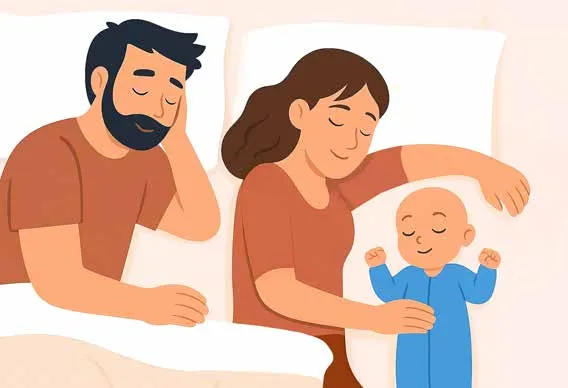
Your baby sleeps most safely near you. Babies who regularly sleep in the protected parental bed sleep safely there.
In the family bed, it is especially important that no one has consumed alcohol, drugs, or medications that cause drowsiness. Premature babies or babies with very low birth weight should always sleep in their own bed.
Safe sleeping places
- Their own crib in your bedroom
- Bedside crib – your baby is close to you and you can easily breastfeed and comfort them at night
- Family bed – when no one has consumed alcohol, drugs, or medications that cause drowsiness
- Cuddle curl in side-lying position – breastfed babies especially like to sleep embraced by mom's arm
Unsafe sleeping places
- Sofas and armchairs – babies can sink into soft cushions and crevices
- Bassinet attachments and carry cots – not designed for prolonged sleep
- Sleeping alone in their own room – unsafe, especially in the first six months
Your baby shows you what they need
Tiredness signs
Babies show their tiredness long before they cry. Your baby rubs their eyes, pulls at their earlobes, turns their gaze away, or starts to whimper. If you respond to these early signs, falling asleep will be easier for both of you.
Hunger signs
Likewise, there are early and late hunger signs. Your baby opens their mouth, turns their head searching back and forth, moves more, or brings their hand to their mouth. The earlier you respond to this, the more relaxed it is for both of you. A baby is fed when hungry, not by the clock.
Recognizing signs of tiredness
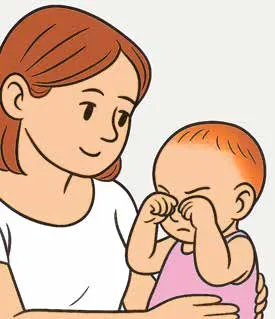
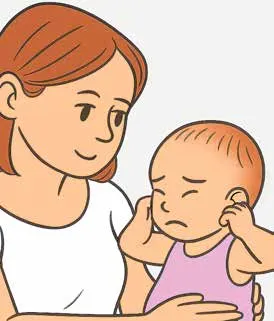
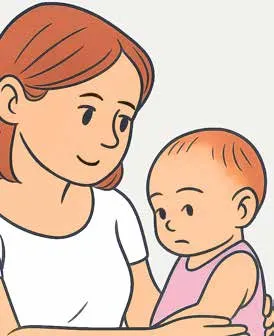
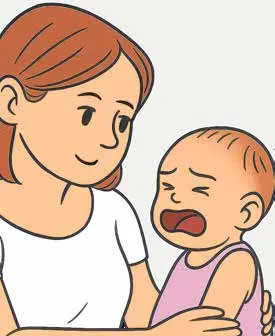
Babies show signs of tiredness long before they start crying. Responding to these signals early makes it easier for both you and your baby.
Recognizing hunger cues






There are early and late hunger cues. The earlier you respond, the easier it is for both of you. If your baby is already crying or kicking, calm them first and then feed. A baby is fed when hungry – not by the clock.
Soothing your baby
Babies relax best through closeness. Some calm down through movement, others through gentle sounds or your heartbeat.
Try what works for you: Carrying, rocking, long exhales, humming, going for a walk until your baby falls asleep, quiet activities with the baby in a carrier, or white noise. Once you've found something, stick with it for now. Consistency and patience demonstrably help more than any training.
The 4-7-8 breathing technique
If you want to calm yourself: Breathe in for 4 seconds, hold your breath for 7 seconds, and breathe out for 8 seconds. Repeat this four times. Your heartbeat becomes calmer, and your baby senses this calm.
Routines and restless nights
The less stressed you are, the better your baby sleeps. On difficult days, think about which tasks can be dropped and what really needs to be done. Especially towards evening, it helps to slow down the pace.
Helpful
- Bathing
- Changing
- Breastfeeding or feeding
- A gentle massage
- Reading
- Cuddling
- Carrying
Less helpful
- Loud environments
- Excitement
- Screen time
- When the baby is alone
Sometimes it is said that babies have fixed phases when they sleep worse. There is no evidence for this. Sleep difficulties often occur when your baby has learned something new, is teething, or is sick. Each baby develops at their own rhythm. More restless nights mean that your baby is developing. Now they simply need you more.
And you parents?
The first years are wonderful and exhausting. You sleep less, have to reorganize, and let go of many things. Look after each other, because especially the mother needs breaks. Share the work and accept help from outside as well.
People have always raised their children in community. It is completely normal to get support: Someone helps with housework or cooks for you, someone watches the baby for a while. Especially as a mother, you need relief. That is not weakness, but common sense.
This brochure was created in collaboration with experienced experts and the artgerecht education initiative.

artgerecht is an internationally recognized education initiative that shows how people of all ages can live in harmony with their natural needs. The artgerecht company group combines evidence-based research, practice, and 15 years of experience in parenting courses, coaching camps & professional training. We are changing the world – baby by baby. www.artgerecht-projekt.de
Redaktion: Nicola Schmidt, Vera Hesels, Prof. Dr. Alfred Längler, Dr. Herbert Renz-Polster, Aleyd von Gartzen